ASRI Facilitates Training for Health Workers Living in Remote Areas
Deep within Indonesia’s rainforests, communities face significant challenges in accessing basic healthcare. These areas often have extreme geographical conditions, serve as important conservation landscapes, and are home to Indigenous peoples and communities that have historically been difficult to reach through formal healthcare services.
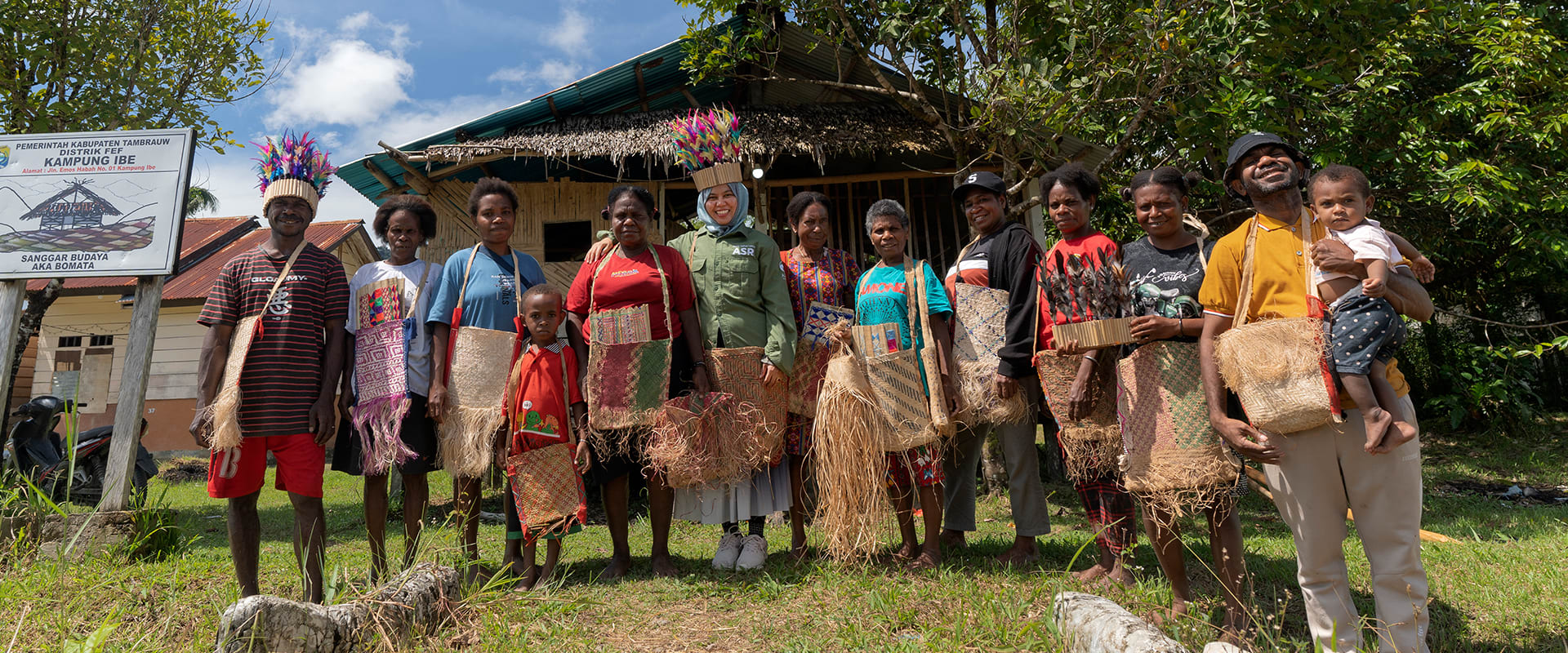
In Rantau Malam and Jelundung villages, Sintang Regency, for example, communities may need to travel by speedboat and canoe for approximately 10 hours to reach essential services. In Fef, Syujak, Miyah, and Mubrani districts of Tambrauw, communities live far from urban centers and primary healthcare facilities. In Sawa Erma District, Asmat Regency, distance and geographical conditions also create significant barriers to accessing healthcare.
These challenges are part of the broader context addressed through Indonesia’s Health System Transformation, initiated by the Ministry of Health in 2022. One of its key pillars is the transformation of primary healthcare and the strengthening of Integrated Primary Healthcare (ILP), which emphasizes promotive and preventive services and brings healthcare closer to communities.
In this context, health workers at the community level, known as health cadres, are central to strengthening primary healthcare systems in rainforest landscapes. They live within the communities they serve, understand local conditions, and can help bridge the gap between communities and formal healthcare services.
ASRI provides training to help ensure that Indigenous peoples and forest communities can exercise their right to health. A total of 63 health cadres from Sintang, Tambrauw, and Asmat participated in training on 25 Basic Skills for Health Cadres: 16 from Sintang, 33 from Tambrauw, and 14 from Asmat.
Through the training, cadres developed practical skills to respond to basic health needs and carry out preventive and promotive activities adapted to the context of rainforest landscapes and Indonesia’s Remote Indigenous Communities.
According to Dr. Richard Kowel, Director of Scale at ASRI, strengthening community health cadres is essential to bringing healthcare closer to people living in remote areas.
“Cadres are an important part of the primary healthcare system, particularly in forest landscapes and Remote Indigenous Communities. They are closest to the communities and understand the local context. Strengthening their capacity is therefore essential to ensuring that healthcare is not only available, but also relevant and responsive to the needs of the people.”
The training marks the beginning of a series of healthcare service modification pilots developed through collaboration between ASRI and the Ministry of Health. Lessons from the training and the cadres’ experiences in applying these skills in the field will help inform the development of a more adaptive and sustainable primary healthcare model.
For Gerdina, a health cadre from Sawa Erma District, Asmat Regency, the training provided new knowledge and greater confidence to carry out her role within the community.
“Mama feels proud to be able to come here and take part in the training until we understand what we have learned. When we return to our village, we can improve our skills and strengthen our work. Through this training, we can work together with nurses, health workers, and doctors in our village or at the district level, in Sawa Erma District.”
The knowledge gained by Gerdina and other cadres does not remain in the training room. They bring it back to their communities as part of an effort to strengthen healthcare from within.
Because ensuring healthy communities is not only about providing healthcare facilities. It is also about ensuring that people living far from formal services have the knowledge, skills, and support they need to protect the health of their communities.