Listening First: How Indigenous Voices from Indonesia Are Helping Shape the Future of Global Health
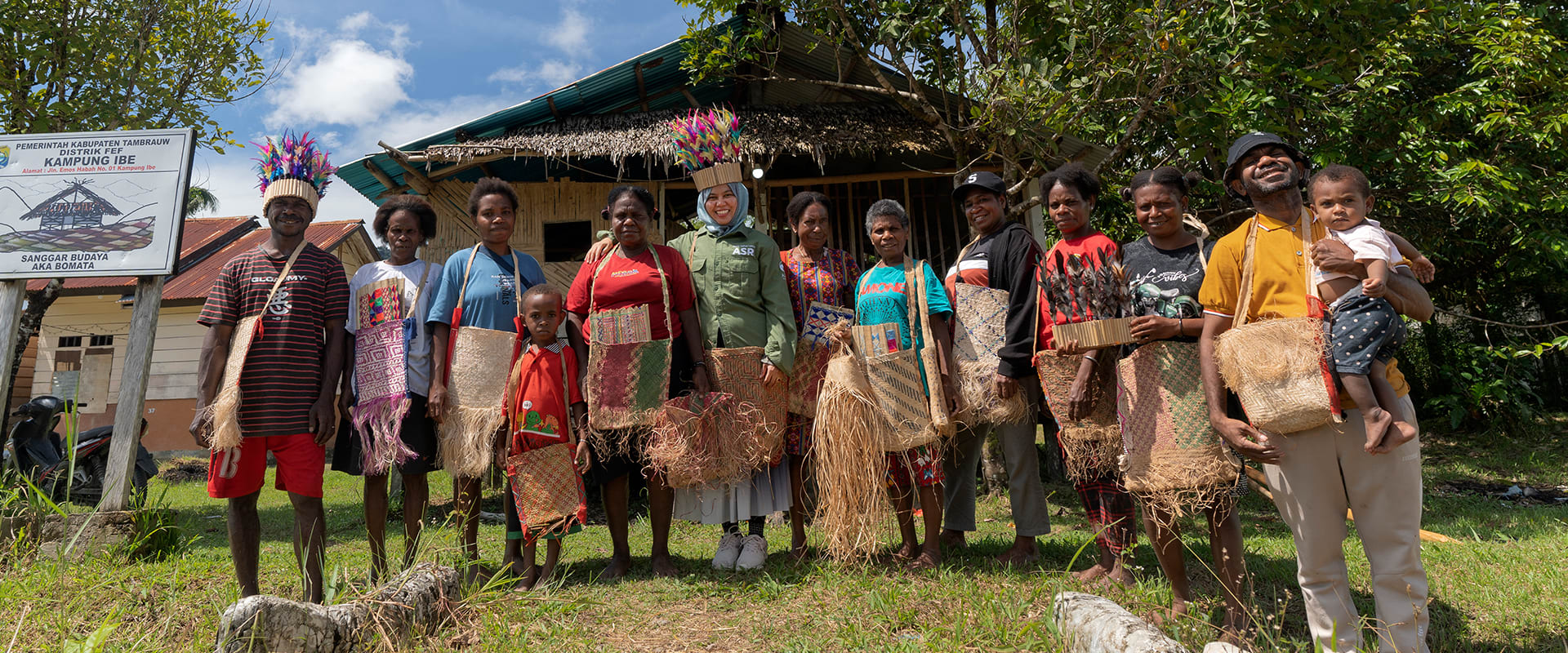
For generations, Indigenous communities across Indonesia have cared for forests, rivers, and traditional food systems that have sustained both people and nature. Yet, when health policies are designed, these same communities are too often among the last to be heard.
At ASRI, we believe that lasting solutions begin by listening—not only to people's health concerns, but also to their knowledge, priorities, and lived experiences. This belief has guided our work for nearly two decades in West Kalimantan and Papua, where healthcare and conservation have never been separate goals, but two parts of the same system.
Over the past several months, that philosophy has extended far beyond the communities where we work. From national policy discussions in Jakarta to a regional consultation convened by the World Health Organization (WHO), ASRI has had the opportunity to help ensure that the voices of Indigenous Peoples and forest-dependent communities contribute to conversations shaping the future of health.
When Communities Become Partners in Policy
Too often, health programs are designed for communities rather than with them.
This year, ASRI brought community health workers, Indigenous community members, and village leaders from Indonesia's Remote Areas and Customary Communities (DTPK KAT) into direct dialogue with national policymakers. Rather than asking others to speak on their behalf, community representatives shared their own experiences navigating healthcare, protecting their lands, and responding to the challenges facing their families.
For ASRI, this reflects our commitment to Radical Listening—creating space for communities to define the problems, identify priorities, and shape solutions from the beginning.
Listening is not the final step of community engagement. It is the first.
Advancing Planetary Health in Indonesia
That same perspective was carried into discussions with Indonesia's Deputy Minister of Health.
Together with our long-time partner, Health In Harmony (HIH), ASRI shared lessons from years of delivering adaptive healthcare services in remote and forest-adjacent communities. These experiences demonstrate that improving health cannot rely solely on clinical care. It also depends on healthy forests, sustainable livelihoods, clean water, food security, and community resilience.
This is the essence of Planetary Health.
For communities living alongside tropical forests, environmental degradation is not simply an ecological issue. It influences nutrition, disease risk, income, and access to healthcare. Likewise, when communities have access to affordable healthcare and sustainable economic opportunities, pressure on forests can decline.
Healthy forests support healthy people—and healthy communities are better able to protect healthy forests.
Bringing Indonesia's Experience to the Global Stage
On 8 June 2026, ASRI joined Indonesia's delegation at the WHO Regional Consultation on the Draft Global Plan of Action for the Health of Indigenous Peoples (GPoA IP).
The consultation brought together governments, Indigenous representatives, technical experts, and development partners from across the region to discuss how health systems can better respond to the needs and rights of Indigenous Peoples.
Representing both the Government of Indonesia and ASRI, Dr. Richard Kowel participated in Breakout Room 4, focusing on the interlinked environmental and social determinants of Indigenous Peoples' health.
The discussions reflected many of the realities ASRI has witnessed throughout nearly twenty years of community-based work.
Indonesia emphasized that health monitoring should recognize the close relationship Indigenous Peoples maintain with their lands, territories, and natural resources. Traditional knowledge and scientific evidence should complement one another rather than operate as parallel systems.
Discussions also highlighted the importance of viewing food sovereignty and land recognition within broader national development priorities, including food security, infrastructure, and poverty reduction.
Another key recommendation emerging from the consultation encouraged greater participation of men in family health and community-based health initiatives, recognizing that equitable health outcomes require shared responsibility across households and communities.
Nearly Twenty Years of Learning Together
None of these ideas are new to ASRI.
Since 2007, our work has consistently shown that human health and environmental health cannot be separated.
When forests disappear, communities often lose more than trees. They lose access to clean water, traditional food sources, medicinal plants, and stable livelihoods. Health challenges become more difficult to address because the environmental foundations that support wellbeing have been weakened.
Conversely, when healthcare becomes accessible and communities are supported in developing sustainable livelihoods, they are better positioned to protect the forests upon which they depend.
This relationship forms the foundation of ASRI's SCALE program and continues to guide our approach today.
A Future Built on Listening
Participating in the WHO consultation represents more than international recognition of ASRI's work.
It demonstrates that lessons learned alongside Indigenous communities in Indonesia can contribute to global conversations on health equity and Planetary Health.
As Dr. Richard Kowel reflected following the consultation
"For generations, Indigenous Peoples have shown an unimaginable resilience, navigating a world that too often forgets them. These communities desperately want care and the barrier is not about willingness. It is the impossibility of getting them. Now, it is time to turn the table. No more waiting. No more isolation. For all the Indigenous Peoples, their rights."
At ASRI, we remain convinced that meaningful progress begins by listening.
When communities are recognized as partners rather than beneficiaries, when Indigenous knowledge is valued alongside scientific evidence, and when healthy ecosystems are understood as the foundation of healthy societies, we move closer to a future where people and nature thrive together.


