ASRI Promotes the Utilization of Non-Timber Forest Products through Mangrove Syrup-Making Training
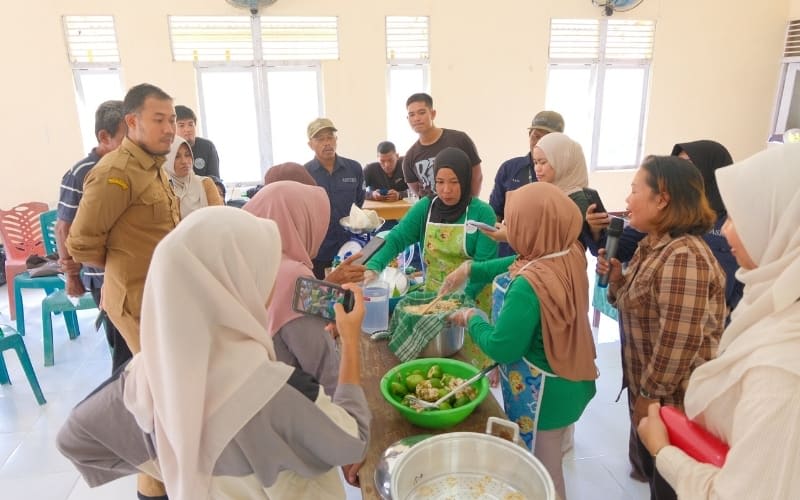
On April 27, 2026, ASRI organized a mangrove syrup-making training for the community of Gunung Sembilan Village, Sukadana District, Kayong Utara Regency, West Kalimantan Province. ASRI collaborated with the Gunung Sembilan Village Government in implementing this activity. A total of 31 participants were involved, consisting of members of the Tourism Awareness Group (Pokdarwis), the Gunung Sembilan Village Government, and representatives of the Village Consultative Body (BPD).
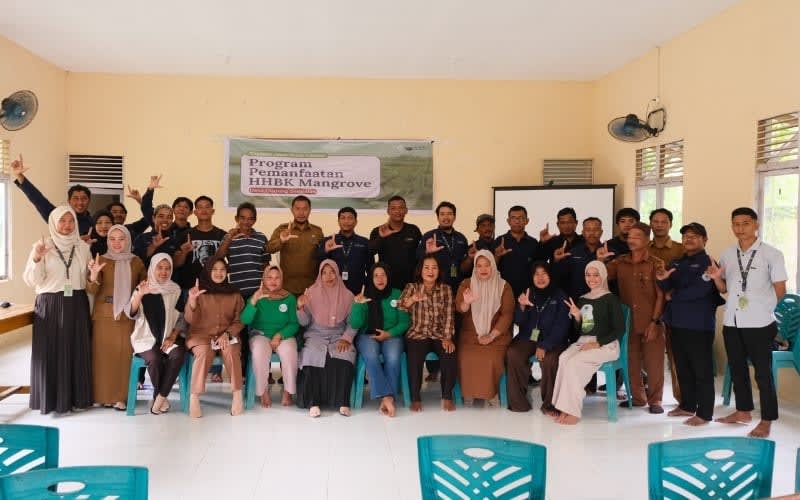
This Non-Timber Forest Product (NTFP) initiative was specifically designed for communities living near forests and coastal areas who directly coexist with mangrove ecosystems, which serve as a natural safeguard for coastal communities. The program aims to support local economic growth by utilizing mangrove fruit without damaging the trees or forest structure, especially considering that in West Kalimantan, the use of mangrove wood for charcoal production has reached tens of millions of kilograms.
Before the syrup-making activity began, ASRI’s livelihood team conducted outreach and socialization sessions with participating community members. Residents were provided with an understanding of the importance of protecting nature and preserving mangrove ecosystems. This aligns with ASRI’s conservation efforts, which have been ongoing for nearly 18 years to protect the forests of West Kalimantan. Moving forward, ASRI plans to explore other mangrove-based products such as dodol and additional processed products, while also encouraging communities to actively participate in mangrove rehabilitation efforts. According to data from the Indonesian Mangrove Map based on satellite imagery monitoring, only 10 hectares of mangrove forest remain in Gunung Sembilan Village.
This was not ASRI’s first activity in Gunung Sembilan Village. Previously, ASRI had distributed goats to widowed women in the village. This latest initiative was warmly welcomed by the Village Head, who emphasized the importance of the program for the local community. He explained that from an ecological perspective, coastal communities such as those in Gunung Sembilan Village—characterized by mountainous and coastal landscapes, directly bordering the sea on the western side, and located within the Gunung Palung National Park area—depend heavily on healthy mangrove ecosystems.
He further stated that mangroves act as a natural barrier against coastal abrasion and seawater intrusion. If communities can process mangrove fruit into products such as syrup, they will have an economic incentive to protect mangroves rather than cut them down. Economically, most residents work as farmers, plantation workers, and fishermen, demonstrating the village’s strong dependence on limited natural resources. Through this initiative, it is hoped that the community will become more creative and proactive in developing additional sustainable sources of income.