Mutual Cooperation Distributing Books to Villages Supporting the Bukit Baka Bukit Raya National Park
In Nusa Poring Village and Mawang Mentatai Village, each of which is approximately 5 hours from the capital of Melawi Regency and directly adjacent to the Bukit Baka Bukit Raya National Park area, books are difficult to find. Because in these 2 villages there are almost no libraries. Be it village libraries or community libraries. There is only a school library with limited book references.
Getting alternative reading from the internet is also problematic. As a result, most of the 2 villages have no signal coverage. Considering that the area is hills and mountains. Only at certain points such as high areas can the internet signal be reached.
Indonesia's relatively low literacy index can be understood amidst these conditions. Like the results of the Program for International Student Assessment (PISA) survey in 2015 which positioned Indonesia in 64th place out of 72 countries. Meanwhile, a year later, in the publication of a survey entitled The Most Literate Nations from Central Connecticut State University, Indonesia was in 60th place out of 61 countries. One level above Botswana.
Meanwhile, in a smaller scope and comparison, namely between provinces in Indonesia, the results of a study entitled Reading Literacy Activity Index (Alibaca) for 34 Provinces from the Center for Educational and Cultural Policy Research (Puslitjak Dikbud), Research and Development Agency of the Ministry of Education and Culture (Kemdikbud) ) can be used as a reference.
The 2019 publication concluded that literacy activities in Indonesia were in the low category. Meanwhile, 9 provinces are in the medium category, 24 provinces are in the low category, and 1 province is in the very low category. West Kalimantan is in 32nd place or in the 3rd lowest along with Papua and West Papua.
Of course, the Puslitjakdikbud doesn't just rank it. There are 4 dimensions that become the scalpel, namely the skills dimension, the access dimension, the alternative dimension, and the cultural dimension that is assessed, referring to the method used by Miller and McKenna in World Literacy: How Countries Rank and Why It Matters, which was published in 2016. In it, Puslitjakdikbud contains 16 indicators that are analyzed.
Nationally, from the 4 dimensions, it appears that the proficiency dimension contains indicators of Latin literacy and the average number of years of schooling that obtains the highest score. This shows that reading ability is not the main problem. The basic problem is in the access dimension which gets the lowest score and the consequences of books not being distributed to remote or inland areas. The low Alibaca Index due to difficult access affects the cultural and alternative dimensions.
This condition is somewhat sad because of the central role of literacy in all aspects of life and the progress of a nation. This also includes fostering public understanding of the importance of protecting nature and the environment. As stated by the Director of the Sustainable Healthy Nature Program (ASRI) Juanisa Andiani, a person's literacy ability can determine whether he will become a modern human who exploits nature and pollutes the environment or, conversely, a human who is able to develop himself and live in harmony with nature and his environment.
Juanisa continued, the planetary health principles promoted by ASRI are also based on finding a balance between preserving and utilizing available Natural Resources (SDA). So that society and nature can mutually maintain each other's sustainability on planet Earth.
"Therefore, literacy skills are very important capital so that humans can develop in this modern era. "While looking for the best way to maintain nature and their environment," he said.
Juanisa also said that the literacy conditions in the 2 villages, which are in remote areas and do not have internet access, appear to have an impact on the literacy skills of their people. He admitted that there had not been a comprehensive survey regarding literacy conditions in the 2 villages. However, there are people who complain that their children's reading skills are not yet fluent in reading at the upper elementary school level.
"The experience of the ASRI medical team also found that several adults were not good at reading. "This becomes crucial when doctors give medicine and they are unable to read the instructions for using the medicine," he said. Juanisa's description regarding literacy in the 2 villages explains the deficiencies in the dimensions of skills, access and alternatives which directly affect the cultural dimension.
In the midst of these conditions, he also said that literacy facilities and infrastructure had a significant effect on the literacy index. Such as the lack of reading books, infrastructure such as school and village libraries, as well as limited time and capacity of teachers or parents are important factors in low literacy levels.
"ASRI realizes the need to increase high literacy skills in 2 villages built in Nusa Poring and Mawang Mentatai. "So ASRI, through funding support from the Tropical Forest Conservation Act (TFCA) Kalimantan, built a Reading Park which also collaborated with teachers and schools in both villages," he said.
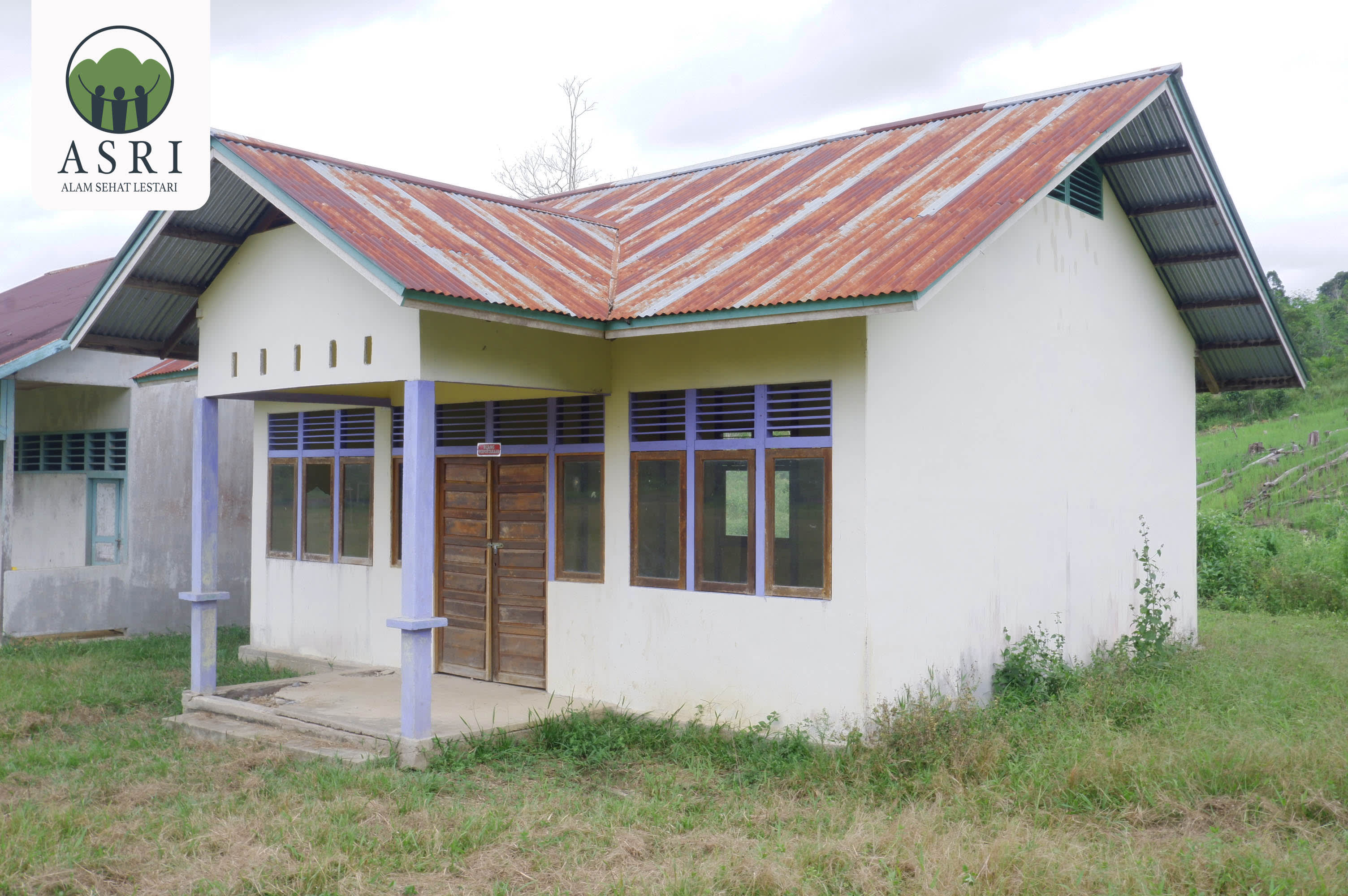
This is in accordance with the requests of the local community and teachers, to improve the quality and facilities of education in the village so that children do not need to go out to the city and spend large amounts of money to get the best knowledge. As well as supporting the National Literacy Movement (GLN) program which includes the School Literacy Movement, Community Literacy Movement and Family Literacy Movement.
Juanisa said, Non-Governmental Organizations (NGOs), communities and the wider community can do the same thing, come and listen to the needs of the community. Then collaborate with various parties to make this happen.
Meanwhile, speaking further about efforts to provide the Reading Park, ASRI-BBBR Education Coordinator, Septiana, said that another reason was so that it could help make it easier for children in these 2 buffer villages to access quality books more easily. "When creating the Reading Park, ASRI collaborated with the school and village government," he said.

ASRI also invites the wider community to work together and support government programs to increase the literacy index in society and overcome the problem of book distribution in remote areas such as Nusa Poring and Mawang Mentatai Villages. By donating books through ASRI which will then be distributed to Reading Parks in the 2 supporting villages of the Bukit Baka Bukit Raya National Park.
"The reading park will operate starting in February 2022. To realize the hope of improving reading skills and ultimately improving the reading culture in these villages, of course ASRI needs people who care to work together to make it happen," he concluded.