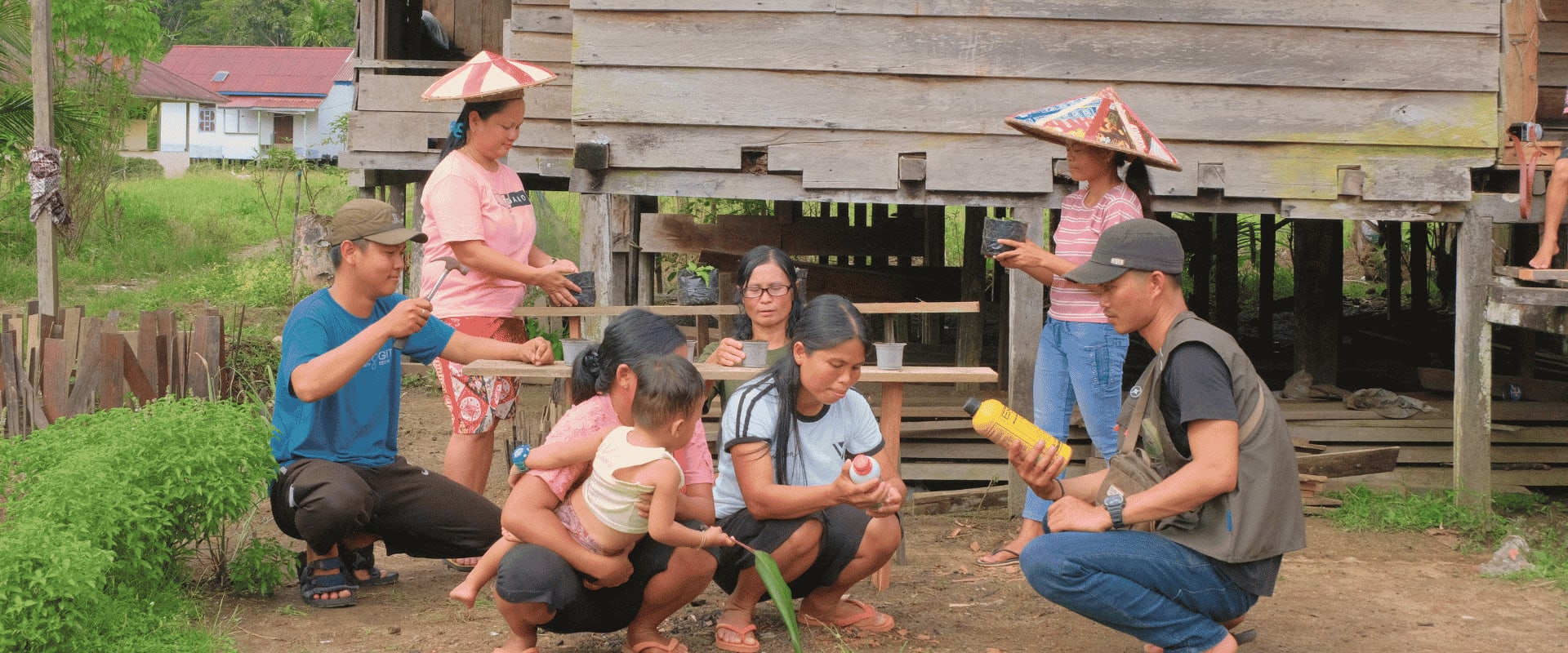
ASRI and Indigenous Communities Cultivate Food Security Through Home Gardens
At the foothills of Mount Bukit Raya, where the Serawai River sustains the daily lives of the Dayak Uud Danum Indigenous community, the forest is far more than a landscape. It is a source of life, a place of learning, and a heritage that has been safeguarded for generations through customary wisdom. Protecting the well-being of communities living alongside the forest is therefore an essential part of conserving the Bukit Baka Bukit Raya landscape. This holistic approach underpins the work of Alam Sehat Lestari Foundation (ASRI), which integrates community health, sustainable livelihoods, and nature conservation around Bukit Baka Bukit Raya National Park.
One of these initiatives is the development of home gardens with the Dayak Uud Danum community in Rantau Malam Village. The program was designed through a participatory process that listened to community needs and aims to strengthen household food security through simple, practical approaches that make use of locally available resources.
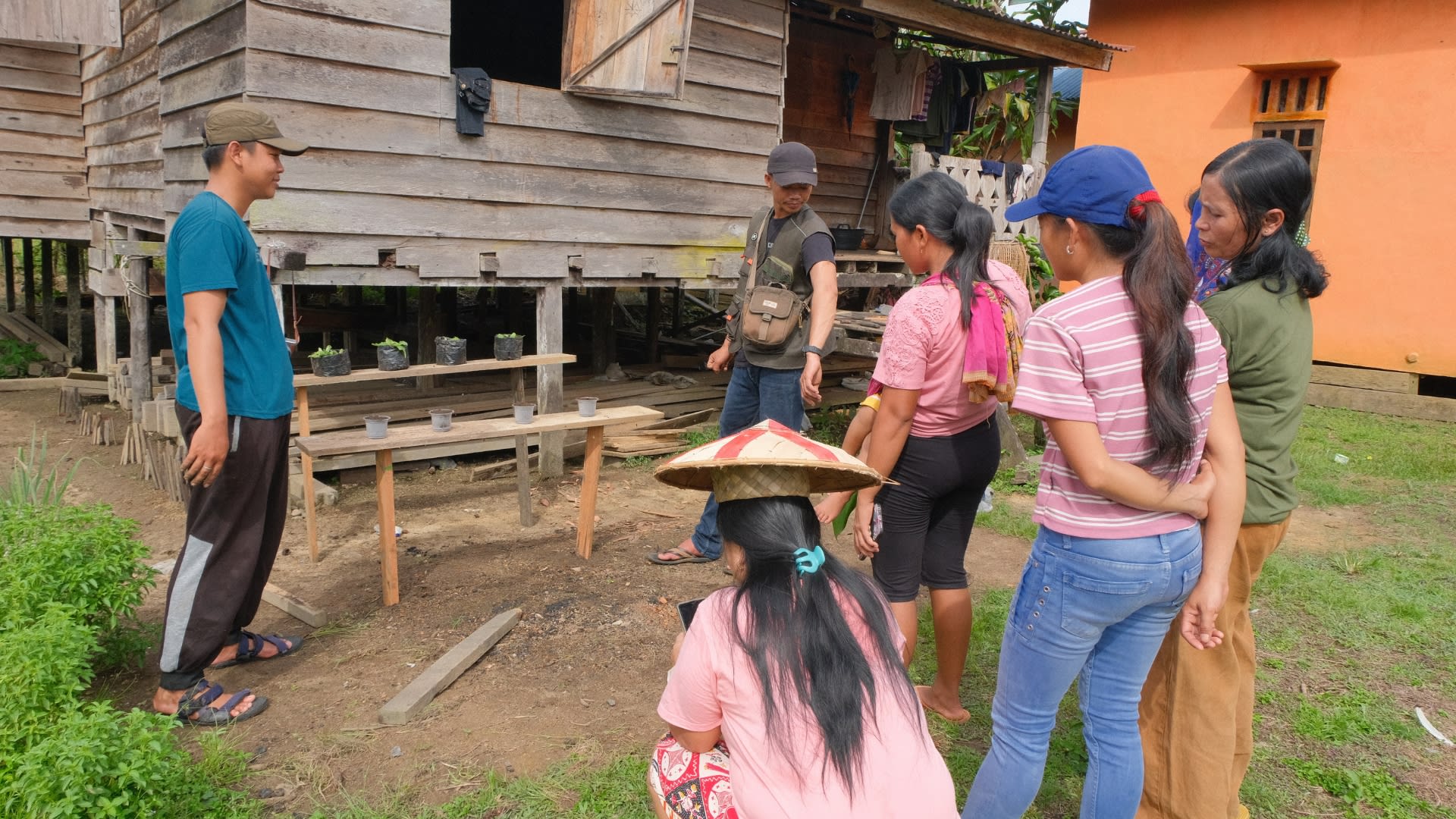
In January 2026, ASRI organized agricultural training for 10 households in Rantau Malam Village. The training built upon an organic fertilizer workshop held in September 2025 with support from the Indonesian Environmental Fund Management Agency (BPDLH). Participants were selected based on their interest in farming, with priority given to women's participation.
For the Dayak Uud Danum community, women play a central role in managing household food needs. Their dedication, attention to detail, and close involvement in daily family life make them key drivers in developing home gardens. Since some families had already begun small-scale gardening, the program was designed to strengthen and expand existing local practices.
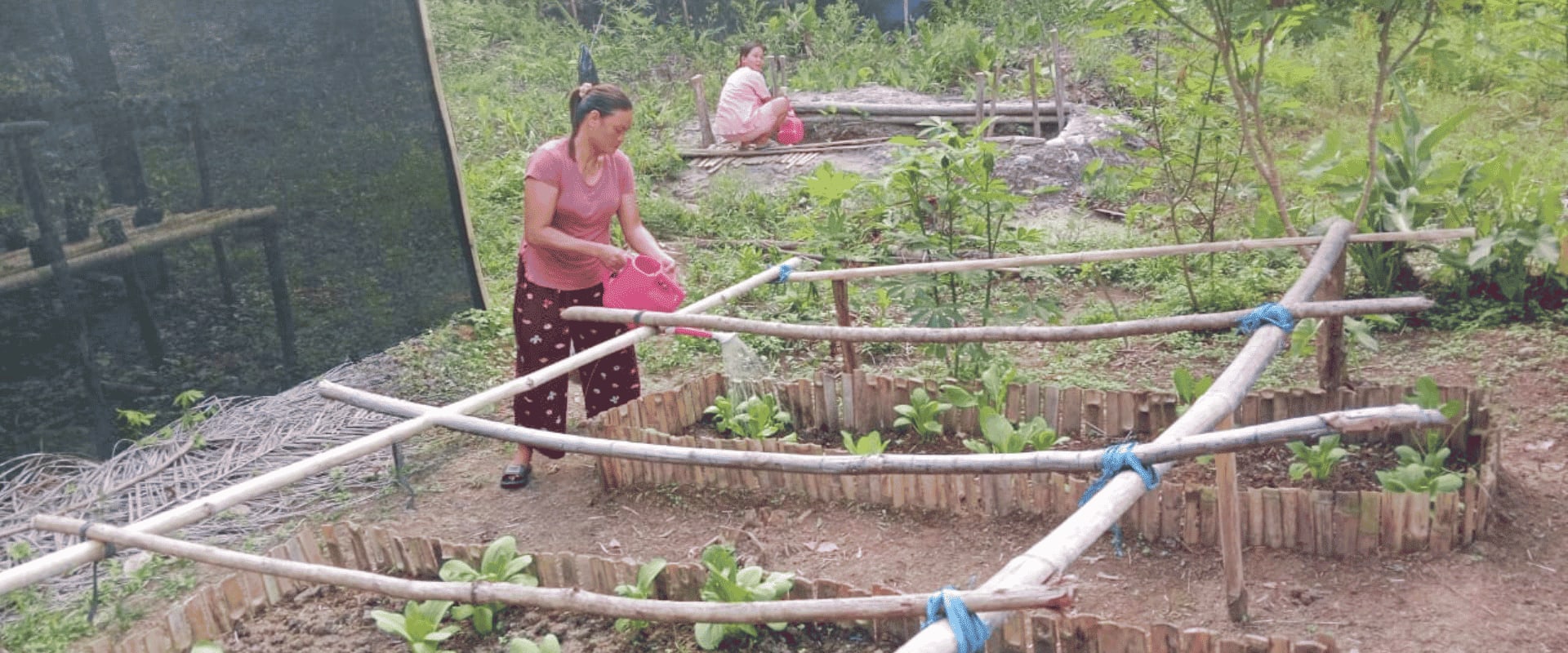
The gardens were established in areas adjacent to the home, making them easy to monitor and maintain on a daily basis while transforming previously underutilized yards into productive green spaces.
An important aspect of the program is the creative use of locally available materials. Used cans serve as planting containers, discarded wooden boards are repurposed into raised beds, and plastic cups become plant pots. This demonstrates that starting a garden does not require significant financial investment—it can begin by making the most of materials already available.
The same principle applies to garden management. Community members use rice-washing water as a natural fertilizer, produce rice husk charcoal, compost household organic waste, and prepare botanical pesticides to control pests. Bamboo leaves are used as mulch, while coconut leaves provide shade to help retain soil moisture and protect crops. By relying on accessible, environmentally friendly materials, families are able to practice simple yet effective organic farming.
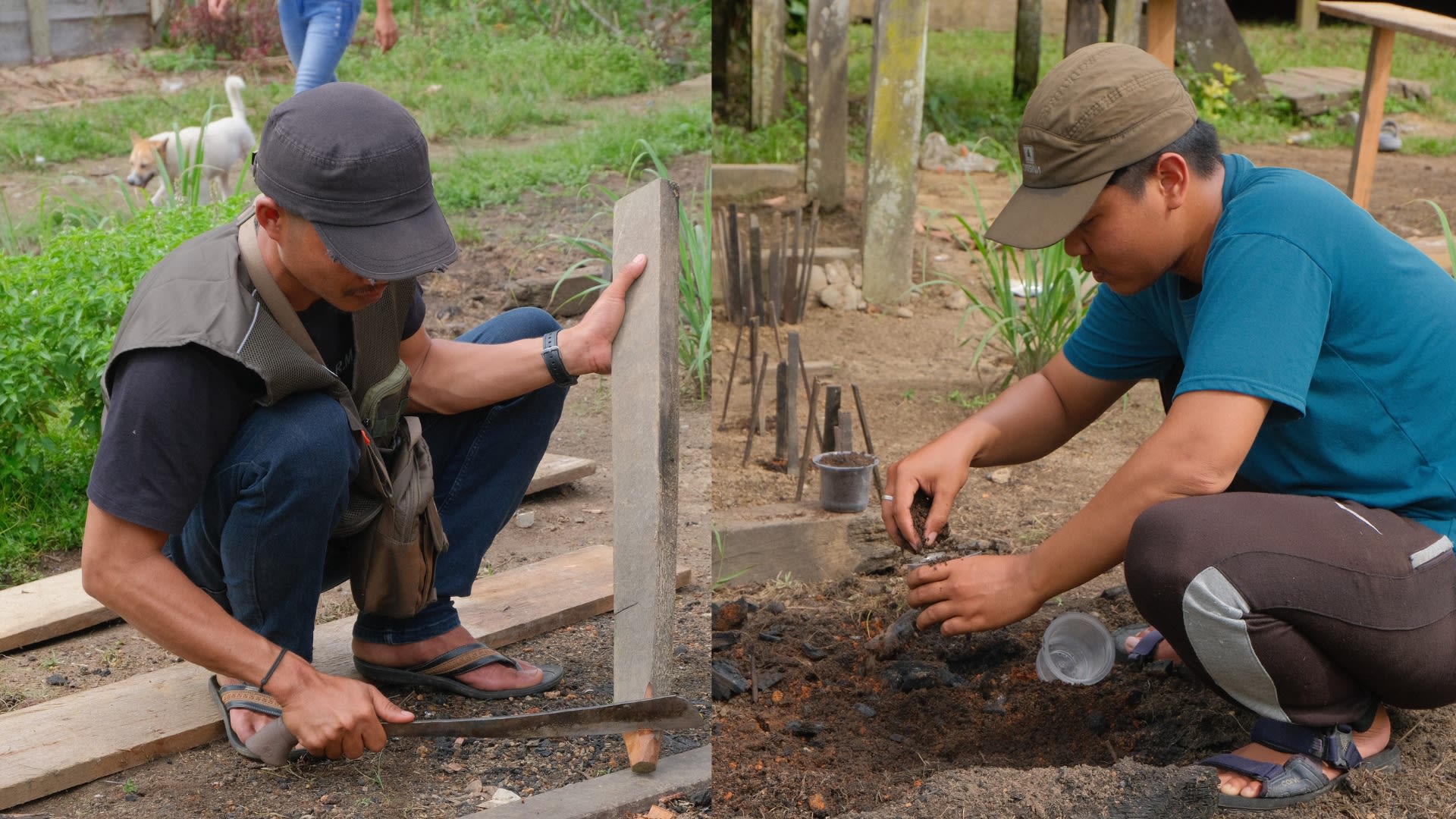
Beyond providing vegetable seedlings, ASRI also supports communities through training on organic fertilizer production, rice husk charcoal, and botanical pesticides. Mentoring continues from garden preparation and planting through maintenance and harvesting, ensuring that participants gain practical knowledge and skills that they can continue applying independently after the program concludes.
Establishing home gardens has not been without challenges. During the early stages, some participants were not yet consistent in maintaining their gardens, resulting in lower-than-expected harvests. Others found it difficult to communicate the challenges they faced. In response, ASRI's field team conducted regular household visits to listen to community concerns and identify solutions together.
This hands-on mentoring has been essential in sustaining participants' motivation through to harvest. Over time, visible changes have emerged. Previously unused yards have become greener and more productive, and harvested vegetables are first used to meet household food needs, helping families reduce daily expenses.
In Bukit Baka Bukit Raya, food security grows from more than the seeds planted in the soil. It grows through shared knowledge, community cooperation, and the leadership of Dayak Uud Danum women who care for their gardens every day. From these modest home gardens grow hope for families, communities, and the forests they have protected for generations. The program reflects ASRI's integrated approach, where community health, sustainable livelihoods, and environmental conservation strengthen one another to create a more resilient future.